Interview with EHA’s European Affairs Committee Member, Isabelle Durand-Zaleski
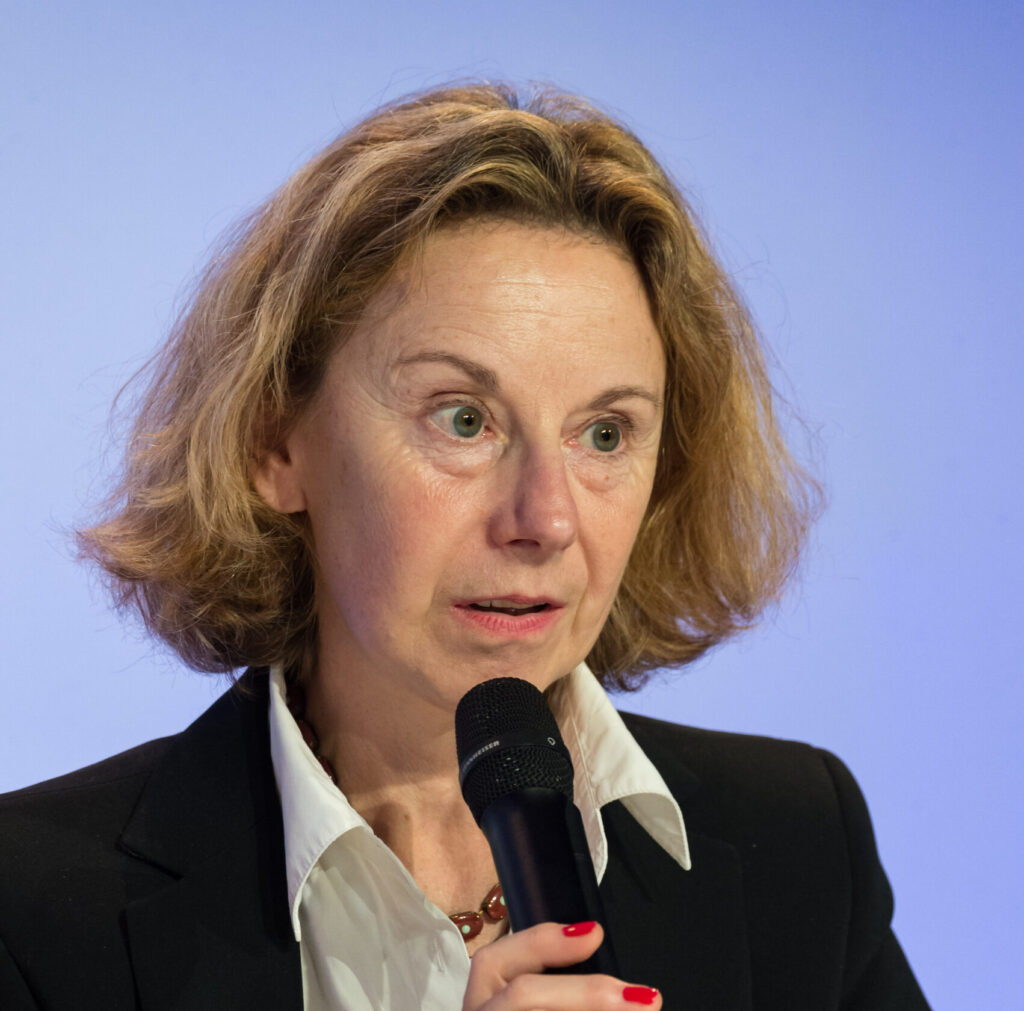
Isabelle Durand‑Zaleski is a medical doctor and professor of public health, currently heading the Health Economics and Health Services Research Unit at AP‑HP (Assistance Publique – Hôpitaux de Paris). Since 2020, she has brought her extensive health economics expertise to EHA’s European Affairs Committee, where her insights have been instrumental in shaping our work on access and affordability.
Why is it important to incorporate a health economics perspective in European policy and regulatory work?
Health economics is a valuable tool to ensure the rational allocation of healthcare resources and a maximization of health gains under budget constraints. It cannot and should not be the sole decision criteria because the healthcare system is also responsible for research, education, and equity, among other missions.
The stakeholders involved in decision making around medicines and budget allocations include politicians, patient advocates, manufacturers, clinicians—each with their own concerns and objectives. This is why the European Affairs Committee’s work is so fascinating—it requires a combination of scientific, clinical and policy expertise.
You’re an EHA expert on the ASCERTAIN project. How will it contribute to improving patient access to new therapies?
Improving affordable and equitable access to innovative therapies in hematology is a core priority for EHA. This requires continuous engagement with policymakers in Brussels to ensure that EU legislation not only stimulates innovation, but also includes strong safeguards that translate scientific progress into patient access.
A good example is EHA’s extensive work on the revision of the EU’s Pharmaceutical Legislation, where we have consistently highlighted the need for access‑oriented provisions. At the same time, EHA also contributes to practical solutions for affordable access to innovative therapies—most notably through the EU-funded ASCERTAIN project.
The objective of ASCERTAIN is to produce a ‘fair pricing’ model, which means that all stakeholders should agree on its fairness. The hematology/oncology community faces possibly greater challenges than other medical specialties with regards to access and pricing, because it includes cancers and rare diseases—both areas where recent advances in gene and cell therapies offer health benefits at unprecedented prices.
The price claims between €350 000 and €2 million per patient threaten the sustainability of European healthcare systems, even the richer ones, but also carry the risk of a social disruption, as the funds for these treatments have to be reallocated from other disease areas.
What have you learned through your involvement in ASCERTAIN?
The ASCERTAIN consortium brings together academics, patient advocates, payers and more. For instance, our kickoff meeting featured an intervention by the CEO of an investment fund, which created a great opportunity to understand what stakeholders value, and what their maximization strategy is. This understanding then forms the basis for the development of a fair pricing model.
Model ‘fairness’ entails that the stakeholders involved agree that the process for reaching a price is fair, even if they potentially disagree on the final outcome. It is also important that this process preserves funding for other diseases, as fairness should be distributed across the entire patient population.
What would you say to EHA members who are considering joining the European Affairs Committee?
The European Affairs Committee is the place to be for those who want to understand how the regulations under which we operate are developed, and for those who want to shape health policy in the European Union. Each Committee member brings a different background and expertise, but our commitment and motivation are the same—working together to improve outcomes for hematology patients.
Which European Affairs topics are you particularly passionate about?
I am very passionate about uncertainties in healthcare, especially where they intersect with health economics. We have a responsibility to ensure that taxpayers’ money is used rationally—by paying for treatments that deliver the benefits they claim to deliver. Many uncertainties are in fact related to clinical trial design. The use of surrogate endpoints, short-term results, small sample sizes, and single‑arm trials can all limit the strength of the evidence and complicate decision making. This makes uncertainties a highly relevant topic for European Affairs and explains why our Committee is currently developing a position paper on it.
Photo, “Isabelle Durand-Zaleski”, is adapted from “Pr Isabelle DURAND-ZALESKI, chef de service de santé publique du CHU Henri Mondor, membre du conseil scientifique des Etats généraux de la santé visuelle” by Mutualité Française (N. Mergui) is licensed under CC BY-NC-ND 2.0